
New study: Nutritional management and supplementation strategies for patients with congenital heart disease
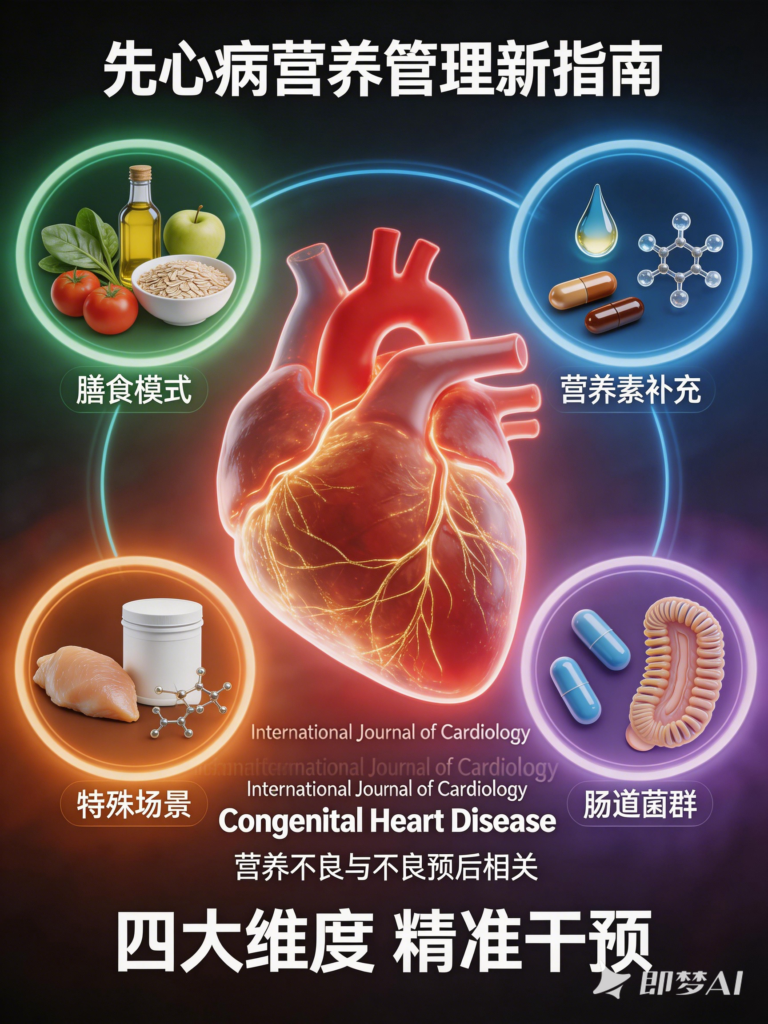
*For patients with congenital heart disease, nutritional management is not only the foundation for maintaining health, but also an important means of delaying disease progression and improving prognosis. However, with the continuous growth and aging of the patient population, issues such as nutritional imbalance, abnormal weight, and micronutrient deficiencies are becoming increasingly prominent, and require more clinical attention. *
New research confirms that nutritional management is a key strategy for patient recovery
Recently, a research team from Vall d’Hebron University Hospital and other institutions in Spain published a review article in the International Journal of Cardiology Congenital Heart Disease, systematically summarizing the nutritional status, dietary recommendations, and supplement applications of patients with congenital heart disease. This study not only reveals the special nutritional challenges faced by this group, but also proposes targeted management strategies from four dimensions: dietary patterns, special nutrient supplementation, special clinical scenarios, and gut microbiota regulation, providing important references for clinical practice.
Nutritional Challenge: A Dual Dilemma Faced by Patients with Congenital Heart Disease
As patients with congenital heart disease age, they not only have to bear the long-term effects of pre-existing heart disease, but are also prone to risk factors such as obesity and metabolic syndrome for acquired cardiovascular diseases.
Research shows that the incidence of malnutrition is relatively high in patients with congenital heart disease and is closely related to poor prognosis. Malnutrition covers two extreme situations: overweight and obesity, and sarcopenia and cachexia. The former is associated with increased cardiovascular risk, while the latter is more common in patients with heart failure, manifested as involuntary weight loss and muscle loss.
Clinical management recommendations based on research background
Based on the above research background, targeted management recommendations for patients with congenital heart disease were systematically summarized from four dimensions: dietary patterns, special nutrient supplementation, special clinical scenarios, and gut microbiota regulation.
1、 Dietary pattern recommendations: Mediterranean diet and DASH diet
In terms of dietary patterns, the study focused on introducing the Mediterranean diet and DASH diet. Both of these dietary patterns emphasize the intake of abundant fruits, vegetables, whole grains, legumes, and nuts, but each has its own emphasis:
-The Mediterranean diet primarily relies on olive oil as the main source of fat and emphasizes the intake of unsaturated fatty acids.
-The DASH diet focuses on limiting sodium, saturated fat, and total fat intake.
Research has shown that although the Mediterranean diet has demonstrated clear benefits in both primary and secondary prevention of cardiovascular disease, the adherence of patients with congenital heart disease to this healthy diet is generally low.
2、 Special nutrient supplementation
-* * Polyunsaturated fatty acids:**
Polyunsaturated fatty acids (PUFAs), especially omega-3 fatty acids derived from the ocean, have potential value in cardiovascular protection. The IMPROVE-IT trial cited in the study showed that supplementation with icosapent ethyl can reduce the risk of cardiovascular ischemic events in high-risk patients. In the population of patients with congenital heart disease, a study found that a low EPA/AA ratio is associated with an increased risk of hospitalization for heart failure, suggesting that omega-3 supplementation may be beneficial for this group of patients. **The guidelines of the European Society of Cardiology recommend that high-risk patients with high levels of triglycerides after lifestyle interventions and lipid-lowering therapy may consider supplementing with n-3 polyunsaturated fatty acids. **
-Iron supplementation:**
Iron deficiency is more common in patients with cyanotic congenital heart disease and is associated with adverse long-term outcomes. Cyanosis patients, due to long-term exposure to low oxygen blood, are compensated by secondary erythrocytosis in the body. However, insufficient iron reserves can affect the synthesis of hemoglobin, thereby damaging tissue oxygen supply.
Research has shown that supplementing with iron supplements can improve the quality of life and exercise ability of patients with iron deficiency and cyanosis. Oral iron supplements (such as ferrous fumarate) are usually well tolerated, with 100 mg of elemental iron per day meeting the needs of most patients; For patients with oral intolerance, intravenous iron may be considered. Clinical practice should detect and correct iron deficiency early by monitoring serum iron, ferritin, and transferrin saturation.
-* * Other micronutrients:**
The study reviewed the evidence of the application of various micronutrients in patients with heart failure:
Vitamin B1 (thiamine) deficiency can lead to reversible cardiomyopathy, which is more common in patients using diuretics. Supplementation may improve heart function.
As a key cofactor in myocardial energy metabolism, small-scale studies suggest that levocarnitine may improve heart failure symptoms and cardiac function.
Although coenzyme Q10 has antioxidant effects, the existing evidence is not sufficient to support its routine use in heart failure.
Supplementation with vitamins D and E has not shown clear benefits and may even have adverse effects.
3、 Special clinical scenarios
-Protein loss enteropathy:**
Protein loss enteropathy is a serious complication in patients undergoing Fontan circulation surgery, characterized by abnormal loss of serum proteins. Such patients generally suffer from nutritional deficiencies due to impaired protein and fat absorption, as well as damage to the lymphatic system. The key to nutritional support lies in implementing a combination of high protein diet (2 g/kg/day) and low-fat diet, and supplementing with medium chain triglycerides, which can be directly absorbed through the portal vein to bypass the damaged lymphatic system.
-Perioperative nutrition:**
For patients undergoing cardiac surgery, preoperative nutritional assessment is of crucial importance. Malnutrition is associated with increased postoperative complications, prolonged stay in the intensive care unit (ICU), and delayed functional recovery. Preoperative nutritional support should be initiated at least 2-7 days in advance, and postoperative enteral nutrition support should be initiated as early as possible. Supplementing with fish oil emulsion may help regulate the inflammatory response after cardiac surgery, shorten mechanical ventilation time and hospital stay.
4. Gut microbiota: a new therapeutic target
The study particularly emphasizes the potential value of gut microbiota in nutritional management of patients with congenital heart disease. Patients with congenital heart disease may suffer from impaired intestinal barrier function, dysbiosis of the microbiota due to factors such as reduced cardiac output, hypoxemia, and venous congestion, which can lead to bacterial translocation and inflammatory response, affecting cardiovascular function. Currently, research on microbiota intervention for patients with congenital heart disease is still insufficient, but this research direction provides a new approach for future nutritional strategies.
Conclusion
The nutritional management of patients with congenital heart disease has shifted from “single nutritional support” to “multidimensional comprehensive intervention”. Whether it is optimizing dietary patterns, supplementing specific nutrients, or regulating gut microbiota, all aim to improve the overall condition of patients and delay disease progression.
Nugene Pharma Shandong Co., Ltd. is deeply engaged in the field of functional raw materials, and its DHA algae oil VigouFull ® PQQ、 Vitamin K2, S-adenosyl-L-methionine p-toluenesulfonic acid sulfate (SAM-e) and other products can provide high-quality raw material choices for nutritional support of patients with congenital heart disease. The separated whey protein solution and hydrolyzed protein solution from Zhejiang Baisui Lai Life Health Technology Co., Ltd. can provide effective supplementation for postoperative protein deficiency patients. L-glutamine powder can be used for anti-inflammatory repair of intestinal barrier damage. Based on science and guaranteed by quality, precise nutrition can help patients obtain more comprehensive health care.